
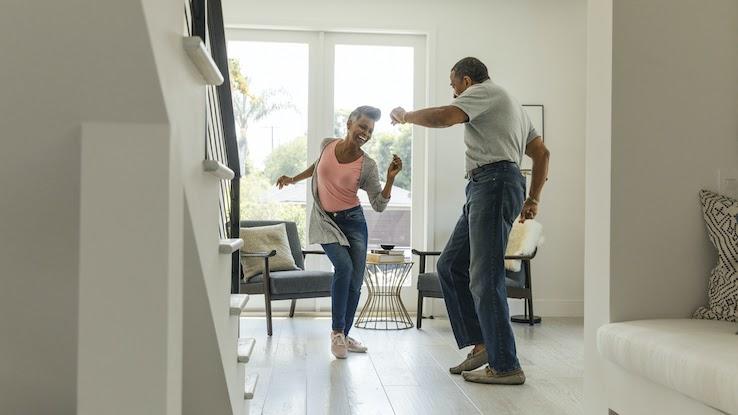
Dancing is one of the oldest and best-known forms of self-expression and entertainment on Earth, existing since antiquity. But aside from self-expression and entertainment, there are some great health benefits to dancing or engaging in dance movement therapy. From getting fitter to boosting your immune system, dancing can lead to improved wellness in a variety of interesting ways.
What Are the Physical Benefits of Dancing?
Dancing is a physical activity, and it has all of the same physical health benefits as similar exercises like walking, bicycling and swimming. Dancing is a helpful activity for strengthening your muscles, increasing your bone health and maintaining a healthy weight. It improves your balance and helps your joints stay healthy. Dancing is also an appropriate activity for many people because it’s so easy to vary the intensity based on individual fitness level and ability. By increasing the music tempo or adding a turn or dip, dancers can get more of a physical benefit.
According to the International Osteoporosis Foundation, it’s estimated that 200 million women worldwide are affected by osteoporosis. To increase bone density and reverse the bone loss of osteoporosis, low impact, weight-bearing exercise such as dancing is a great exercise to choose. Dancing also increases muscular strength — something that people often lose as they age. The loss of muscle power and bone density can lead to a loss of mobility and a decrease in quality of life as people get older.
Dancing is a great way to maintain a healthy weight as well. A healthy weight is essential for everyone, no matter their age. However, as people get older, their metabolisms slow. More and more people have sedentary lifestyles, with growing numbers of people working in offices instead of in physical jobs. By spending a little time dancing, people can reboot their metabolisms and have fun doing it.
Balance is essential for preventing injuries in people of all ages. Each year, one out of every three people 65 years of age or older will experience some kind of fall resulting in an injury, and sometimes those injuries are fatal. According to several studies, one of the best ways to increase balance is by dancing. Studies found that seniors who participated in group dance classes had improved balance and gait, two significant factors in preventing falls.
According to several research studies whose results were compiled into a report by the President’s Council on Physical Fitness and Sports, exercises like dancing can actually help ward off disease. One study showed that stress hormones that suppress the immune system are reduced during moderate physical activity and that the effect is cumulative over time. This means that, by dancing just a few days a week, you may be able to heal from infections faster or have milder symptoms when you get a cold.
What Are the Emotional Benefits of Dancing?
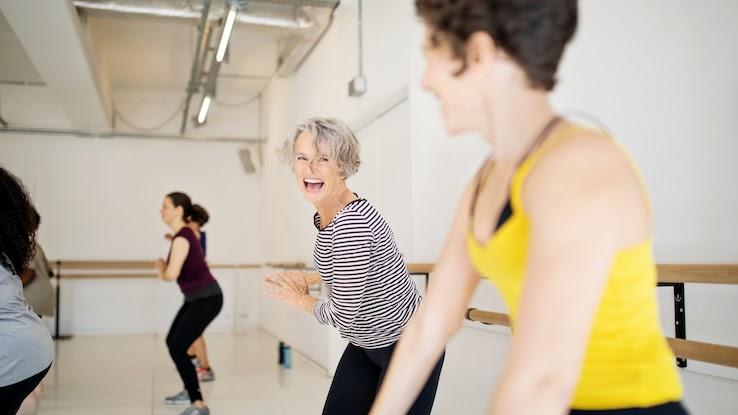
In addition to improving your physical health, dancing can help you feel better in other ways. This type of activity has been shown to help prevent mild depression, and it also improves confidence among dancers.
Depression is becoming an increasingly important issue among adolescents and adults. A recent study found that dance movement therapy was shown to alleviate depression; it may improve psychological stress and even depression by regulating the levels of serotonin and dopamine in the body. Because taking dance classes is a social activity, it helps limit the isolation that often contributes to depression, particularly in people who live alone.
Dance also helps improve confidence. Each time a new dance step is mastered, dancers experience an increase in confidence in addition to an elevated mood. That increase in confidence carries over to every aspect of life.
What Are the Mental Benefits of Dancing?
A 21-year study of seniors published in the New England Journal of Medicine found that frequent dancing actually helped stave off the effects of Alzheimer’s disease and other forms of dementia, and it also increased mental acuity in people of all ages. In short, dancing may make you smarter. The study followed a group of seniors 75 years old and older and was conducted by the Albert Einstein College of Medicine. In it, researchers examined several forms of physical and cognitive activities and found that dancing caused a 76% reduction in the risk levels and effects of dementia.
The study also found that the complexity of dancing can actually increase neural pathways. These neural pathways change as we learn, and our brains rewire the pathways as needed throughout our lives. This ultimately helps us learn more effectively and store memories, which can be particularly vital benefits for people who are developing dementia. When it comes to the human mind, the phrase “use it or lose it” really does apply.
Dance is a physical activity, so it’s essential to consult a doctor to ensure the exercise is safe for you to do if you have underlying conditions. You can also try several different styles of dance, but give each one a few weeks. This way, you can determine the type you like most and get a better feel for what you’ll be more likely to stick with.
Resource Links:
https://www.ncbi.nlm.nih.gov/pmc/articles/PMC6040685/
https://www.ncbi.nlm.nih.gov/pmc/articles/PMC6657024/
https://pubmed.ncbi.nlm.nih.gov/25773628/
https://pubmed.ncbi.nlm.nih.gov/29270864/
https://www.ncbi.nlm.nih.gov/pmc/articles/PMC2034191/
https://pubmed.ncbi.nlm.nih.gov/29428927/